The Tape Machine That Captured Reality: Classic Recordings Made on the Nagra IV-S
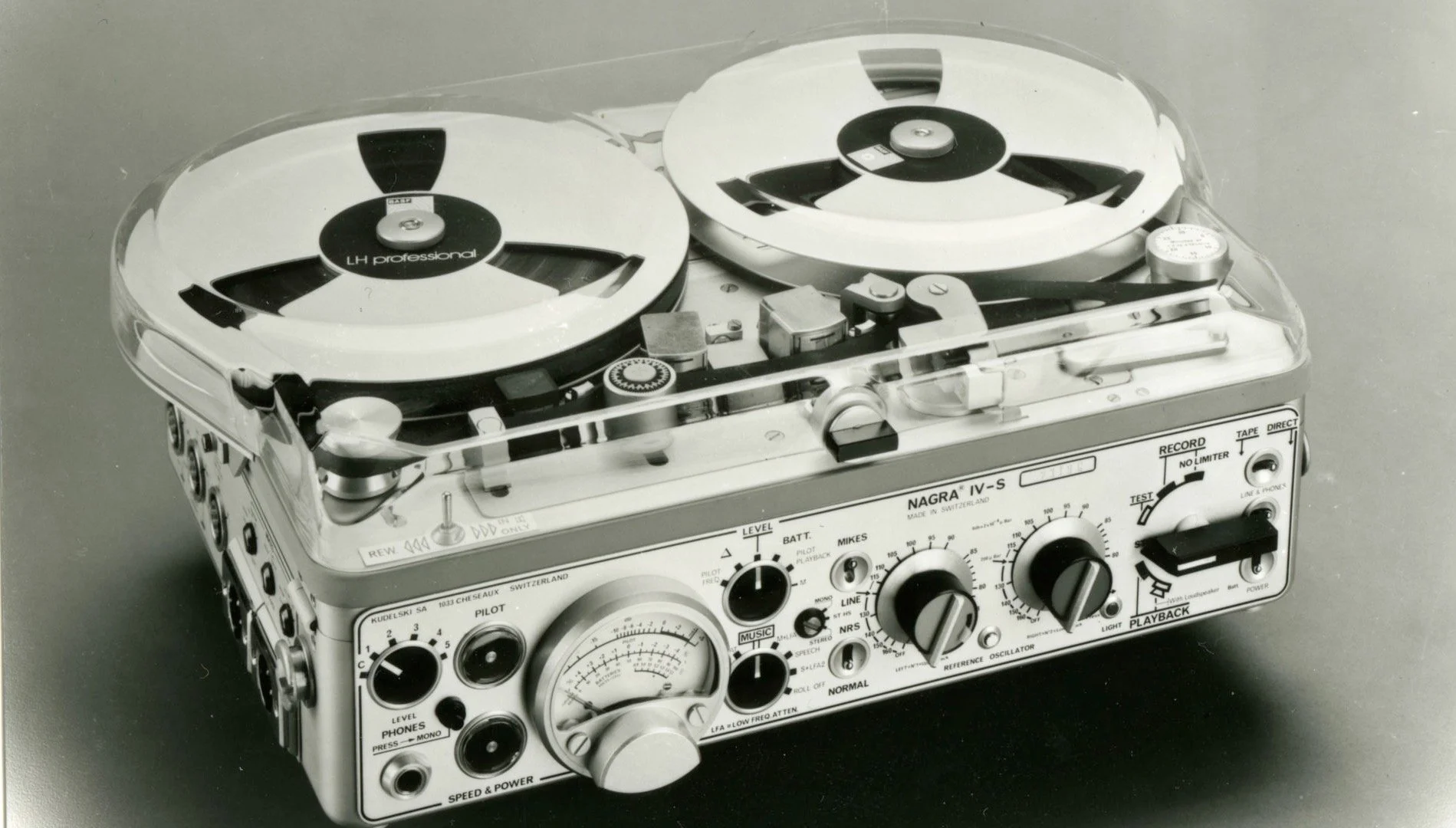
From audiophile jazz clubs to the Grateful Dead’s soundboard, explore the legacy of the legendary Swiss portable recorder.
The history of recorded music is often viewed through massive studio consoles and multi-track behemoths like Studers or Ampexes. But there is a parallel history—one of capturing raw reality in the field—that belongs almost exclusively to one machine: the Nagra IV-S.
Released in 1971, this stereo analog tape recorder is often called the "Rolex of sound." Built in Switzerland with ruby-bearing precision, battery-operated portability, and ultra-high-quality microphone preamps, the IV-S wasn't designed for complex studio overdubs. It was designed to go where the sound was and capture it with unparalleled fidelity.
Because it is a 2-track stereo machine, it was rarely used to track studio pop albums. Instead, its legacy lies in audiophile field recordings, legendary live performances, and decades of cinema sound.
Here are the essential classic recordings that owe their existence to the Nagra IV-S.
1. The Audiophile Standard: Jazz at the Pawnshop (1976)
If you have ever auditioned high-end loudspeakers, you have likely heard this album. It is widely considered the most famous audiophile recording ever made, revered for its uncanny spatial accuracy and "you are there" ambience.
It was not recorded in a studio. It was captured live over two nights at the Stampen jazz club in Stockholm by engineer Gert Palmcrantz.
The Rig: Palmcrantz used just two Neumann U47 microphones feeding directly into two Nagra IV-S recorders running at 15 ips (Nagramaster EQ).
The Result: The recording captured everything—the clinking of glasses, the murmur of the crowd, and the precise location of every instrument on the cramped stage. It proved that a simple stereo signal path into a flawless portable machine could outperform complex studio productions.
2. The "Betty Boards": Grateful Dead, Cornell 5/8/77
The Grateful Dead allowed their fans to tape shows, but the holy grails of their live catalog are the "Betty Boards"—recordings made by their legendary sound engineer, Betty Cantor-Jackson.
Betty was known for her impeccable ear and her insistence on using the best gear available. Throughout the late 70s, she plugged directly into the soundboard and recorded shows onto her personal Nagra IV-S.
The most famous of these is the May 8, 1977, show at Cornell University, often cited as the greatest performance of their career. The pristine sonic quality that distinguishes this recording from a standard bootleg is entirely due to the fidelity of the Nagra tape transport and preamps.
3. The Sound of Cinema: Hollywood's Golden Ears
While film scores were recorded in studios, the dialogue and location sound for nearly every major motion picture from the 1970s through the 1990s relied on Nagra recorders. The IV-S (and its mono predecessor, the 4.2) was the industry standard for on-set audio.
Some films turned the recorder itself into a plot device:
The Conversation (1974): Francis Ford Coppola’s masterpiece centers entirely on surveillance audio. The fidelity of analog tape is practically a character in the movie.
Diva (1981): The plot of this French cult classic kicks off with an illicit bootleg recording of an opera singer made using a Nagra IV-S hidden in a delivery bag.
The Brown Bunny (2003): Famous for rejecting digital technology, director Vincent Gallo recorded the film's entire sound on a Nagra IV-STC (the time-code version of the IV-S).
4. Modern Applications: Aphex Twin & Chris Watson
The Nagra IV-S is not merely a museum piece. It remains a prized tool for modern artists seeking unique sonic textures.
Aphex Twin (Richard D. James): On his Grammy-winning 2014 album Syro, the liner notes explicitly list the Nagra IV-S among the gear used. James often uses high-end analog tape to process digital tracks, adding highly desirable tape saturation and color to his electronic productions.
Chris Watson: A founding member of Cabaret Voltaire turned world-renowned wildlife sound recordist, Watson uses the Nagra IV-S to capture high-dynamic-range nature environments, valuing its reliability in extreme conditions and its ability to handle quiet natural sounds without a high noise floor.
The Analog Legacy
It is a common misconception that studio blockbusters like Dark Side of the Moon were tracked on Nagras. They weren't. But if those albums featured sound effects—footsteps, voices in the street, ticking clocks—there is a very high probability those sounds were captured in the field by an engineer carrying 15 pounds of Swiss aluminum over their shoulder.
The Nagra IV-S didn't create music; it documented reality with a precision that digital formats still strive to emulate.
Here & Now artist David Baron records to Nagra IV-s
One of the key features of the IV-S is its ability to record in stereo and in a variety of different formats, including PCM, DAT and MP3. The device also includes a built-in microphone preamp, a limiter and a low-cut filter. It also has a built-in timecode generator and reader.
The IV-S was widely used in the film and television industry and it is still considered a reference in terms of audio quality, durability and reliability. Although it is not currently in production, it is still widely used by professional audio engineers and can be found on the second hand market.
It is also used for many of the sound recording in film industry, and many documentaries and movies used Nagra IV-S for sound recording.
‘Falling Dreams’ from the album Nagra Piano recorded onto the Nagra IV-S
Listen to David Baron - Nagra Piano full album on Spotify, Apple, Amazon, Deezer, You Tube